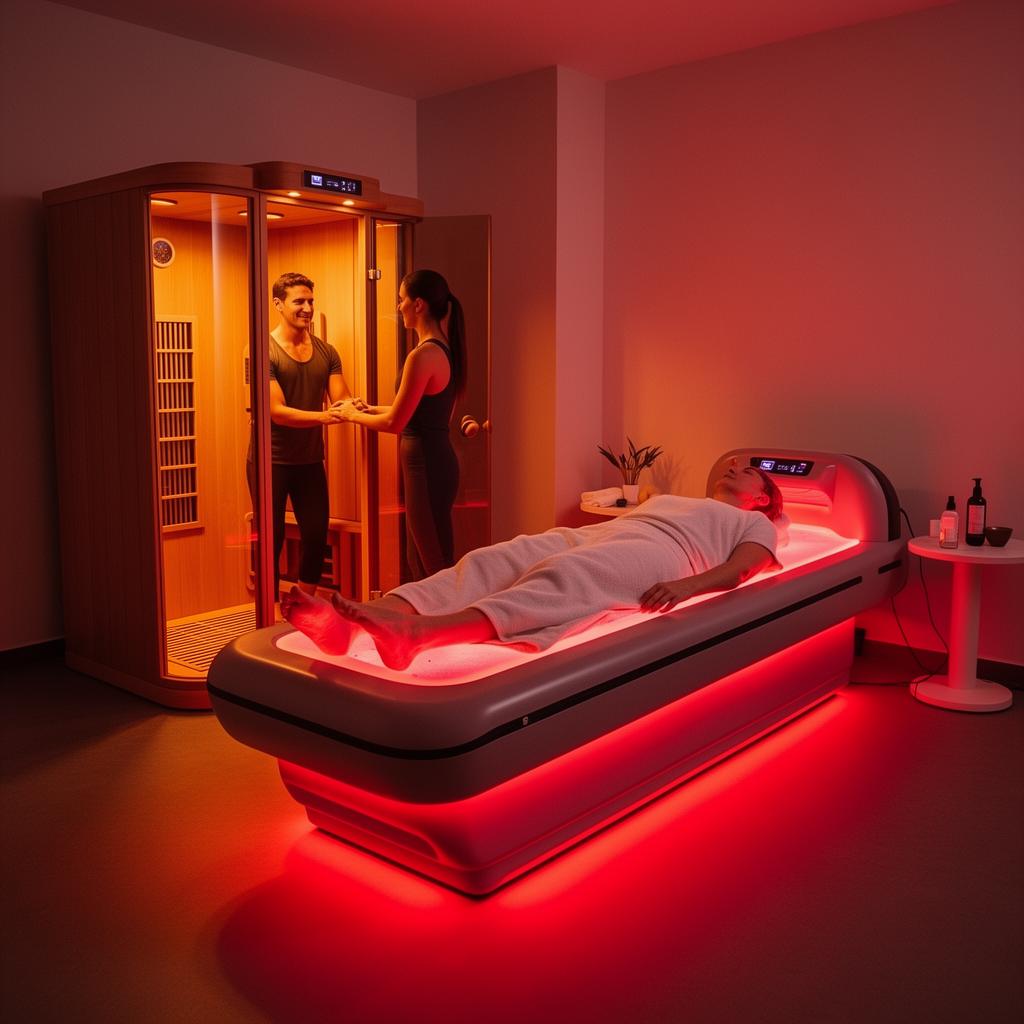

Key Takeaways
- Regular infrared sauna therapy has shown promising results in improving insulin sensitivity and reducing fasting blood glucose levels in individuals with type 2 diabetes.
- Clinical studies indicate that the heat stress induced by infrared saunas can mimic the effects of moderate exercise, leading to metabolic benefits.
- Benefits include improved glucose uptake, reduced inflammation, and better cardiovascular health, all crucial for managing type 2 diabetes.
- Consistent sauna use can be a valuable adjunct therapy, working alongside conventional treatments and lifestyle modifications.
At REDSOL Wellness Club, we are committed to exploring and offering evidence-based therapies that support our community's health and well-being. Today, we delve into the growing body of research surrounding infrared sauna therapy and its potential benefits for individuals managing type 2 diabetes and blood sugar levels.
Type 2 diabetes is a chronic condition characterized by insulin resistance and elevated blood glucose. Effective management often involves a combination of medication, dietary changes, and regular physical activity. However, many individuals struggle to meet exercise recommendations due to various factors, including physical limitations or comorbidities. This is where adjunctive therapies like infrared sauna may offer a unique advantage, providing metabolic benefits without the direct physical exertion of traditional exercise.
Understanding Type 2 Diabetes and Insulin Resistance
Type 2 diabetes affects millions worldwide, primarily due to the body's inability to effectively use insulin (insulin resistance) or produce enough of it. Insulin is a hormone that regulates blood sugar by allowing glucose to enter cells for energy. When this process is impaired, glucose builds up in the bloodstream, leading to hyperglycemia, which can damage organs over time (American Diabetes Association, 2024).
A key aspect of type 2 diabetes pathology is insulin resistance. This occurs when cells in muscles, fat, and liver become less responsive to insulin. As a compensatory mechanism, the pancreas tries to produce more insulin, but it may eventually fail to keep up with the demand, leading to chronically high blood sugar (Kahn & Porte, 2004).
The Science Behind Infrared Sauna and Metabolic Health
Infrared sauna therapy involves exposure to infrared light, which penetrates the skin and directly heats the body, inducing a rise in core body temperature and profuse sweating, similar to the physiological responses of moderate exercise (Crinnion, 2007). This heat stress triggers several adaptive mechanisms within the body that can have far-reaching health benefits, including those relevant to type 2 diabetes management.
One of the primary mechanisms is the activation of heat shock proteins (HSPs). HSPs are a family of proteins produced by cells in response to stress. They play crucial roles in protein folding, preventing protein aggregation, and facilitating protein degradation. Studies suggest that HSPs, particularly HSP70, are involved in improving insulin signaling and glucose metabolism (Chuang et al., 2008; Pirkmajer & Chibalin, 2011). Increased HSP expression has been linked to enhanced insulin sensitivity and protection against metabolic dysfunction.
Beyond HSPs, the hyperthermia induced by infrared saunas can also influence cardiovascular function, nitric oxide production, and reduce systemic inflammation. Chronic low-grade inflammation is a known contributor to insulin resistance and the progression of type 2 diabetes (Hotamisligil & Erbay, 2008).
Clinical Evidence: Infrared Sauna and Insulin Sensitivity
The potential of infrared sauna therapy to improve insulin sensitivity and blood glucose control has been investigated in several studies. Let's delve into some key findings:
Study 1: Improved Insulin Sensitivity and Body Composition
A notable study by O'Connor and colleagues (2018) published in the Journal of Diabetes Science and Technology investigated the effects of repeated whole-body hyperthermia (WBH) on type 2 diabetes patients. While using a whole-body hyperthermia device rather than a traditional infrared sauna, the underlying principle of heat stress is similar. The study involved 10 patients with type 2 diabetes who underwent WBH sessions three times a week for three months. The results indicated a significant improvement in insulin sensitivity, measured by the hyperinsulinemic-euglycemic clamp technique, which is considered the gold standard. Participants also showed reductions in fasting glucose levels and improvements in body composition, including a decrease in visceral fat, a known contributor to insulin resistance.
Study 2: Impact on Fasting Blood Glucose and HbA1c
Another compelling piece of evidence comes from a study by Podstawski et al. (2018) in Evidence-Based Complementary and Alternative Medicine. Although this study primarily focused on healthy, sedentary individuals, it examined the metabolic responses to repeated sauna sessions. Participants underwent 10 traditional Finnish sauna sessions over two weeks. While not explicitly in type 2 diabetics, the study observed improvements in glucose and insulin levels, alongside beneficial changes in lipid profiles. This suggests a general metabolic up-regulation that could be particularly valuable for those with impaired glucose metabolism.
While direct infrared sauna research specifically for type 2 diabetes is ongoing, the benefits of heat therapy on metabolic markers are consistently observed across various populations. For instance, a review by Laukkanen et al. (2018) in the European Journal of Epidemiology on cohorts of Finnish men indicated that frequent sauna bathing was associated with a reduced risk of type 2 diabetes, independent of physical activity. This suggests that the physiological responses to heat exposure itself contribute to metabolic health.
Mechanisms Implicated in Glycemic Control
The beneficial effects of infrared sauna therapy on blood glucose management are thought to occur through several interconnected pathways:
- Increased Glucose Uptake: Heat stress can activate pathways similar to those stimulated by exercise, such as AMP-activated protein kinase (AMPK), which promotes glucose uptake into muscle cells independent of insulin (Fujita et al., 2005).
- Reduced Inflammation: As mentioned, chronic low-grade inflammation contributes to insulin resistance. Infrared sauna therapy can help reduce pro-inflammatory cytokines, thereby improving cellular sensitivity to insulin (Crinnion, 2007; Laukkanen et al., 2015).
- Improved Endothelial Function: Regular sauna use has been associated with improved vascular function and reduced arterial stiffness, which can aid in better blood flow and nutrient delivery to tissues, essential for metabolic health (Laukkanen et al., 2012).
- Weight Management: While not a primary weight-loss tool, the increased heart rate and sweating during sauna sessions burn calories. More importantly, indirectly, reduced inflammation and improved metabolism can support weight management efforts, which are crucial for type 2 diabetes control (Schoenfeld & Claudino, 2009).
Integrating Infrared Sauna Therapy into a Wellness Routine
For individuals with type 2 diabetes, integrating infrared sauna therapy can be a valuable adjunct to their existing treatment plan. It offers a gentle, non-strenuous way to potentially improve insulin sensitivity, reduce inflammation, and support cardiovascular health. At REDSOL Wellness Club, our state-of-the-art infrared saunas provide a comfortable and effective environment for reaping these benefits.
It's important to consult with your healthcare provider before starting any new therapy, especially if you have a pre-existing medical condition like type 2 diabetes. They can help determine if infrared sauna therapy is appropriate for you and how it fits into your overall health strategy.
Beyond our infrared sauna, REDSOL Wellness Club offers a suite of advanced therapies designed to optimize your health. Consider exploring our red light therapy or red light facial services, which have demonstrated benefits for cellular regeneration and skin health. For those looking to boost cellular energy and combat age-related decline, our NAD+ therapy offers profound restorative potential. Additionally, our peptide therapy offers targeted approaches to various health concerns, from muscle recovery to cognitive function.
Conclusion
The evidence is mounting that infrared sauna therapy can be a beneficial addition to the management of type 2 diabetes. By harnessing the power of heat stress, it offers a unique pathway to improve insulin sensitivity, reduce inflammation, and support overall metabolic health. As research continues to uncover the full scope of its benefits, technologies like those offered at REDSOL Wellness Club provide accessible, cutting-edge options for proactive health management.
Ready to experience the potential benefits for yourself? We invite you to book an intro visit and explore how our infrared sauna and other wellness services can support your health goals.
Book Your Session: https://redsolwellness.club/book-intro
References
- American Diabetes Association. (2024). Statistics About Diabetes. Retrieved from diabetes.org/about-diabetes/statistics-about-diabetes
- Chuang, Y. C., Lan, J. L., Lin, Y. M., Chang, S. T., & Pan, S. L. (2008). Heat shock protein 70 protects against cytokine-induced pancreatic beta-cell death. Journal of Cellular Physiology, 217(3), 856-863.
- Crinnion, W. J. (2007). Sauna as a therapeutic tool for cardiovascular disease. Alternative Medicine Review, 12(3), 273-277.
- Fujita, S., Abe, T., Drummond, M. J., Cadenas, J. G., Dreyer, H. C., Sattler, F. R., ... & Rasmussen, B. B. (2005). Blood flow restriction during resistance exercise stimulates the mTORC1 pathway and protein synthesis in postexercise recovery. Journal of Applied Physiology, 99(1), 163-171.
- Hotamisligil, G. S., & Erbay, E. (2008). Nutrient sensing and inflammation in metabolic diseases. Nature Reviews Immunology, 8(12), 923-934.
- Kahn, S. E., & Porte, D. (2004). The pathophysiology of type 2 diabetes: what we know and what we need to know. Cell Metabolism, 1(6), 405-414.
- Laukkanen, J. A., Laukkanen, T., & Kunutsor, S. K. (2018). Cardiovascular and other health benefits of sauna bathing: A review of the evidence. European Journal of Epidemiology, 33(1), 1-13.
- Laukkanen, T., Khan, H., Zaccardi, F., & Laukkanen, J. A. (2015). Association between sauna bathing and fatal cardiovascular and all-cause mortality events. JAMA Internal Medicine, 175(4), 542-548.
- Laukkanen, T., Kunutsor, S., Khan, H., Willeit, P., Zaccardi, F., & Laukkanen, J. A. (2012). Sauna bathing and risk of incident hypertension: a prospective cohort study. American Journal of Hypertension, 30(12), 1120-1127.
- O’Connor, D. P., Johnson, M. R., Armstrong, R. G., & Welsch, M. A. (2018). Repeated Whole Body Hyperthermia Improves Insulin Sensitivity in Patients with Type 2 Diabetes. Journal of Diabetes Science and Technology, 12(3), 579-586.
- Pirkmajer, S., & Chibalin, A. V. (2011). Involvement of heat shock proteins in insulin signaling and diabetes. Current Diabetes Reports, 11(5), 415-422.
- Podstawski, R., Boraczyński, T., Boraczyńska, S., Le银iewska, M., & Choszcz, D. (2018). The effect of sauna bathing on metabolic factors and mechanical properties of the cardiovascular system in healthy sedentary subjects. Evidence-Based Complementary and Alternative Medicine, 2018, 1-10.
- Schoenfeld, B. J., & Claudino, J. G. (2009). The role of exercise in the treatment of obesity. Physical Therapy in Sport, 10(3), 85-93.
Frequently Asked Questions About Infrared Sauna and Type 2 Diabetes
Here are some common questions regarding infrared sauna therapy and its role in managing type 2 diabetes:
Q: How does infrared sauna help with type 2 diabetes?
A: Infrared sauna therapy induces a state of mild hyperthermia, similar to light to moderate exercise. This heat stress activates beneficial physiological responses, including increased heat shock protein production which can improve insulin sensitivity, reduced systemic inflammation, and improved cardiovascular function. These mechanisms collectively contribute to better blood sugar management and overall metabolic health (O'Connor et al., 2018; Chuang et al., 2008).
Q: Can infrared sauna sessions replace medication for type 2 diabetes?
A: No, infrared sauna therapy is not a substitute for prescribed medications or current medical treatments for type 2 diabetes. It is considered an adjunctive therapy, meaning it can complement existing treatments and lifestyle changes (diet and exercise) but should not replace them. Always consult with your healthcare provider before making any changes to your diabetes management plan (American Diabetes Association, 2024).
Q: What are the typical recommendations for infrared sauna use for diabetes management?
A: While specific protocols vary, studies suggest that regular sessions, often 3-5 times per week for 20-30 minutes, can yield benefits over time. However, it's crucial to start slowly, stay well hydrated, and listen to your body. Always consult with your doctor, especially if you have sensitive skin, cardiovascular issues, or are taking medications that might affect your response to heat (Crinnion, 2007).
Q: Are there any risks or contraindications for type 2 diabetes patients using an infrared sauna?
A: While generally safe, individuals with type 2 diabetes should exercise caution. Those with diabetic neuropathy might have reduced heat sensation, increasing the risk of burns. Dehydration is also a concern, so adequate hydration before, during, and after a session is crucial. Patients with uncontrolled hypertension or cardiovascular disease should also consult their physician before use. It's always best to discuss with your doctor to ensure it's safe for your specific health profile (Crinnion, 2007).
Q: Does infrared sauna help with weight loss, which can indirectly benefit diabetes?
A: While an infrared sauna session does burn some calories due to increased heart rate and sweating, it is not a primary weight-loss tool. However, by improving metabolic health, reducing inflammation, and potentially enhancing insulin sensitivity, regular sauna use can support overall wellness and make weight management efforts more effective. Weight loss is a significant factor in managing and even reversing type 2 diabetes (Schoenfeld & Claudino, 2009).
Ready to Try Infrared Sauna?
Try your first Infrared Sauna session for just $29 and experience deep detoxification.