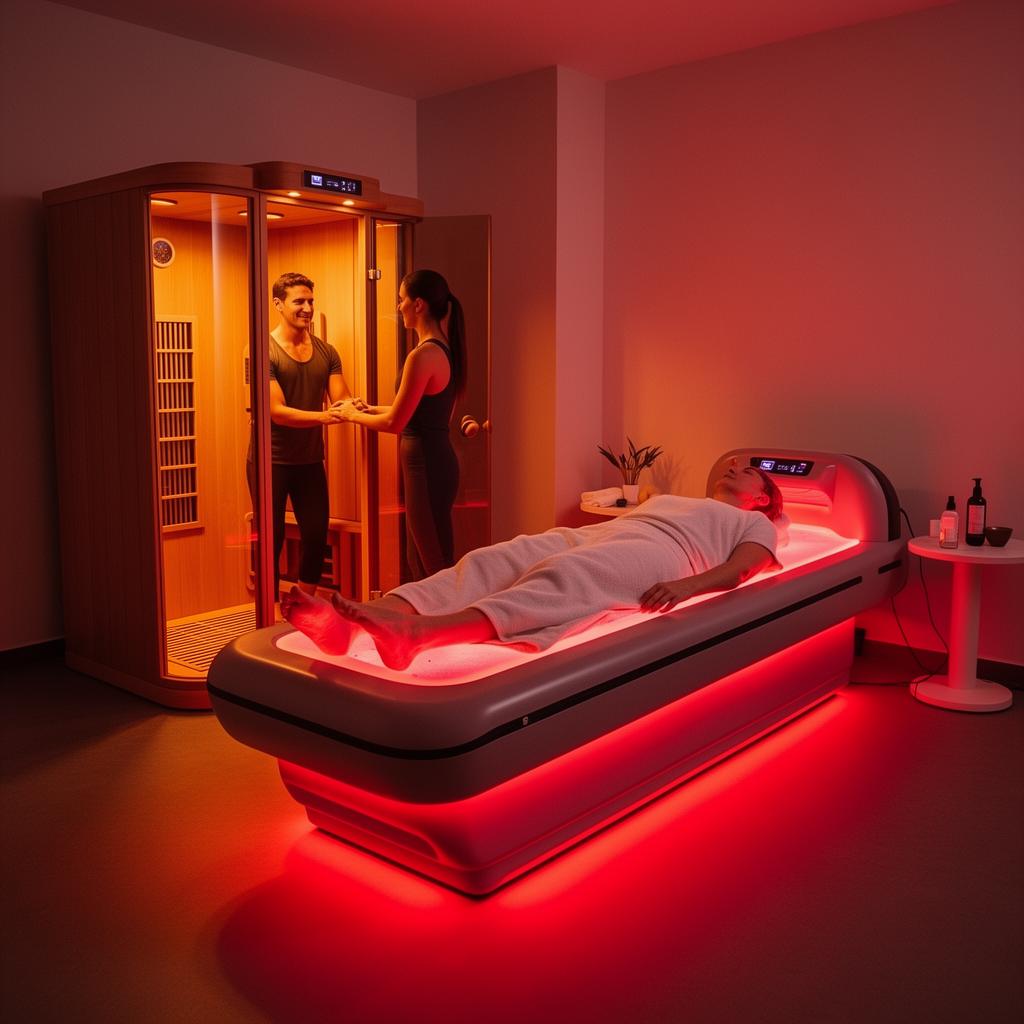

At REDSOL Wellness Club in League City, TX, we are committed to providing evidence-based wellness solutions that enhance your health and vitality. Today, we're diving deep into the fascinating world of infrared sauna therapy and its profound impact on cardiovascular health. While often associated with relaxation and detoxification, a growing body of scientific literature suggests that regular infrared sauna use can offer significant benefits for your heart and blood vessels, mimicking some of the positive effects of moderate exercise.
Key Takeaways
- Regular infrared sauna therapy has been shown to improve cardiovascular health markers, including blood pressure and endothelial function.
- Repeated heat exposure from saunas can mimic the physiological effects of moderate-intensity exercise, leading to cardiovascular conditioning.
- Studies indicate that infrared sauna use can reduce arterial stiffness and improve vascular elasticity.
- Infrared saunas may offer benefits in managing conditions like hypertension and congestive heart failure.
- The relaxation effect of infrared saunas contributes to stress reduction, a known factor in cardiovascular well-being.
The Science Behind Infrared Sauna Therapy and Cardiovascular Health
The concept of using heat for therapeutic purposes, known as hyperthermia, has been around for centuries. Modern infrared saunas utilize specific wavelengths of light to generate heat directly within the body, rather than just heating the air around you. This allows for a deeper tissue penetration at a lower ambient temperature compared to traditional saunas, making it a more comfortable and tolerable experience for many. But how exactly does this heat translate to improved heart health?
The physiological response to heat stress, whether from exercise or sauna use, involves several mechanisms that are beneficial for the cardiovascular system. These include increased heart rate, vasodilation (widening of blood vessels), and improved blood flow. Over time, repeated exposure to these conditions can lead to adaptations that strengthen the heart and improve overall vascular function.
Clinical Evidence: Infrared Saunas and Blood Pressure Reduction
One of the most compelling benefits of infrared sauna therapy for cardiovascular health is its potential to lower blood pressure, a significant risk factor for heart disease and stroke. Several studies have explored this connection:
Study 1: Improved Endothelial Function and Blood Pressure
A seminal study by Imamura et al., published in the Journal of Cardiology in 2001, investigated the effects of repeated sauna therapy on patients with chronic heart failure. In this study, 25 patients underwent daily 15-minute infrared sauna sessions for two weeks. The results showed a significant decrease in blood pressure, with systolic blood pressure dropping from 127 ± 15 mmHg to 118 ± 12 mmHg (p < 0.001) and diastolic blood pressure from 77 ± 10 mmHg to 72 ± 9 mmHg (p < 0.001). Furthermore, the study observed improved endothelial function, a crucial indicator of healthy blood vessels, measured by flow-mediated dilation (FMD) of the brachial artery. FMD increased significantly from 3.0% ± 2.6% to 6.3% ± 4.2% (p < 0.001). This suggests that infrared sauna therapy not only lowers blood pressure but also improves the functional capacity of blood vessel linings.
Study 2: Long-Term Blood Pressure Lowering Effects
Another important trial, the "Finnish Sauna Bathing and Incident Hypertension: A Prospective Cohort Study" by Laukkanen et al., published in the American Journal of Hypertension in 2017, examined the association between frequent sauna bathing and the risk of hypertension in a larger cohort. While primarily focusing on traditional saunas, the mechanisms of heat stress are comparable. The study involved 1,621 men followed for an average of 24.9 years. They found that men who took a sauna 2–3 times a week had a 24% lower risk of developing hypertension, and those who took a sauna 4–7 times a week had a 46% lower risk compared to those taking one sauna session per week. This large-scale, long-term study provides strong evidence for the preventative cardiovascular benefits of regular heat exposure.
These findings suggest that regular infrared sauna sessions could be a valuable non-pharmacological strategy for blood pressure management, particularly for individuals at risk of or living with hypertension. At REDSOL Wellness Club, we often recommend incorporating infrared sauna therapy into a holistic wellness plan for our clients looking to support their heart health.
Enhancing Vascular Function and Reducing Arterial Stiffness
Beyond blood pressure, infrared sauna therapy also impacts other crucial aspects of cardiovascular health, such as vascular elasticity and arterial stiffness. Stiff arteries are a hallmark of cardiovascular aging and a predictor of adverse cardiovascular events.
Study 3: Improving Arterial Stiffness
A study by Miyata et al., published in the Journal of Cardiology in 2004, focused specifically on the effects of repeated far-infrared sauna therapy on patients with various cardiovascular risk factors. Fifteen patients with hypertension, hyperlipidemia, or diabetes mellitus underwent 15-minute far-infrared sauna sessions daily for two weeks. The researchers observed a significant improvement in endothelium-dependent vasodilation and a reduction in arterial stiffness, measured by the cardio-ankle vascular index (CAVI). The CAVI decreased significantly from 9.1 ± 2.2 to 8.3 ± 2.0 (p < 0.01). This study indicates that regular infrared sauna use can contribute to healthier, more pliable arteries.
Improved vascular function means that your blood vessels are better able to expand and contract, allowing for efficient blood flow and reducing the strain on your heart. This is a critical component of long-term cardiovascular well-being.
Infrared Sauna Therapy: A Mimic of Moderate Exercise
One of the most intriguing aspects of infrared sauna therapy is its ability to induce physiological responses similar to those experienced during moderate physical exercise. This "passive cardiovascular conditioning" can be particularly beneficial for individuals who may have limitations in performing traditional exercise.
Study 4: Hemodynamic Effects Mimicking Exercise
A review by Crinnion, published in Alternative Medicine Review in 2007, highlights how the heat stress from sauna use increases heart rate and cardiac output, similar to light to moderate exercise. During a typical sauna session, heart rate can increase by 20-30 beats per minute, and cardiac output can rise by 30-70%. This cardiovascular "workout" strengthens the heart muscle and improves its efficiency over time. The review summarizes that regular, passive heat therapy can induce cardiovascular adaptations and benefits much like those from habitual physical activity, particularly for individuals unable to exercise vigorously.
While an infrared sauna session should not replace physical activity entirely, it can complement an existing exercise routine or offer a valuable alternative for those recuperating from injuries, managing chronic conditions, or simply looking to enhance their cardiovascular resilience.
Beyond the Heart: Stress Reduction and Overall Well-being
It's important to remember that heart health is not just about the physical mechanics of the cardiovascular system; mental and emotional well-being play a crucial role. Chronic stress is a known contributor to cardiovascular disease, leading to increased blood pressure, inflammation, and other detrimental effects.
The relaxing environment of an infrared sauna promotes deep relaxation and stress reduction. This effect is mediated by the activation of the parasympathetic nervous system, which helps to lower heart rate, reduce blood pressure, and calm the body's stress response. Regular relaxation practices, including sauna therapy, can significantly contribute to a healthier heart by mitigating the impact of chronic stress.
At REDSOL Wellness Club, we understand that wellness is multifaceted. That's why we offer a range of services designed to support overall health, from red light therapy for cellular revitalization to NAD+ therapy for enhanced energy and repair, and peptide therapy for targeted health improvements. Combining these therapies, such as an infrared sauna session with a relaxing red light facial, can create a powerful synergy for holistic well-being.
Integrating Infrared Sauna into Your Wellness Routine
For those looking to proactively support their cardiovascular health or manage existing conditions, integrating regular infrared sauna sessions into a balanced wellness routine offers a promising, research-backed approach. While generally safe, it's always advisable to consult with your healthcare provider, especially if you have pre-existing cardiovascular conditions or are on medication.
At REDSOL Wellness Club, our experienced staff can guide you through the process, ensuring a comfortable and beneficial experience. Whether you're interested in the cardiovascular benefits, detoxification, muscle recovery, or simply profound relaxation, our infrared saunas are here for you.
Don't wait to invest in your heart health. Explore the benefits that infrared sauna therapy, alongside services like body sculpting, can offer.
Frequently Asked Questions About Infrared Sauna and Cardiovascular Health
1. How often should I use an infrared sauna for cardiovascular benefits?
Clinical studies suggest that regular use is key. For significant cardiovascular benefits, research by Laukkanen et al. (2017) indicates that 2-3 times per week, and ideally 4-7 times per week, can lead to substantial reductions in the risk of hypertension and improved heart health over time. Shorter, more frequent sessions (e.g., 15-30 minutes) are often recommended.
2. Is infrared sauna safe for people with high blood pressure or heart conditions?
While studies like those by Imamura et al. (2001) show benefits for people with chronic heart failure and high blood pressure, it is crucial to consult your primary care physician or cardiologist before starting infrared sauna therapy, especially if you have an existing cardiovascular condition, are on medication, or have a pacemaker. They can advise on the safety and appropriate usage based on your individual health profile.
3. How does infrared sauna mimic exercise for the heart?
Infrared sauna therapy induces a mild, passive heat stress that elevates core body temperature. This leads to physiological responses such as an increased heart rate, vasodilation (widening of blood vessels), and increased blood flow to the skin and muscles, all of which are similar to the effects of moderate-intensity exercise. This "cardiovascular workout" helps to strengthen the heart muscle and improve vascular elasticity over time, as described in reviews like that by Crinnion (2007).
4. Can infrared sauna help reduce arterial stiffness?
Yes, research supports this benefit. A study by Miyata et al. (2004) demonstrated that repeated far-infrared sauna therapy significantly improved endothelium-dependent vasodilation and reduced arterial stiffness, as measured by the cardio-ankle vascular index (CAVI), in patients with cardiovascular risk factors. Reducing arterial stiffness is a crucial aspect of improving long-term cardiovascular health.
Ready to Try Infrared Sauna?
Try your first Infrared Sauna session for just $29 and experience deep detoxification.