Case Study: Red Light Therapy for Hair Regrowth — Clinical Evidence for Alopecia
At REDSOL Wellness Club in League City, TX, we are continually exploring cutting-edge, evidence-based therapies to enhance your vitality and well-being. One such therapy gaining significant traction for its remarkable benefits, particularly in the realm of hair restoration, is red light therapy, also known as low-level laser therapy (LLLT) or photobiomodulation (PBM).
Hair loss, whether due to genetics, stress, or other factors, can significantly impact self-esteem and quality of life. For individuals grappling with conditions like androgenetic alopecia (AGA), finding effective and non-invasive solutions is a priority. This deep-dive case study will explore the compelling clinical evidence supporting the use of red light therapy for hair regrowth, examining specific studies, mechanisms of action, and tangible results.
Key Takeaways
- Red light therapy (LLLT/PBM) is a clinically proven, non-invasive treatment for various types of hair loss, particularly androgenetic alopecia.
- Clinical studies consistently demonstrate its effectiveness in increasing hair density, thickness, and overall hair count.
- The mechanism involves stimulating mitochondrial activity, increasing ATP production, reducing inflammation, and promoting hair follicle proliferation.
- Significant improvements, such as a 39% increase in hair density, have been observed in clinical trials.
- Red light therapy offers a safe alternative or complement to traditional hair loss treatments with minimal side effects.
Understanding Androgenetic Alopecia (AGA)
Androgenetic alopecia, commonly known as male-pattern baldness or female-pattern hair loss, is a hereditary condition characterized by a progressive miniaturization of hair follicles, leading to shorter, finer, and eventually absent hair (Ellis et al., 1998, Journal of Investigative Dermatology Symposium Proceedings). The primary culprit is the hormone dihydrotestosterone (DHT), which shortens the anagen (growth) phase of the hair cycle and prolongs the telogen (resting) phase, ultimately leading to permanent hair loss (Sinclair, 2004, British Medical Journal).
Traditional treatments for AGA include topical minoxidil and oral finasteride, which can have side effects and may not be suitable for everyone. This highlights the need for alternative, non-pharmacological interventions like red light therapy.
The Science Behind Red Light Therapy for Hair Regrowth
Red light therapy works by exposing cells to specific wavelengths of red and near-infrared light. These wavelengths, typically between 630 nm and 670 nm for visible red light and 800 nm to 850 nm for near-infrared light, are absorbed by chromophores within the cells, primarily cytochrome c oxidase (CCO) in the mitochondria (Karu, 2010, Photomedicine and Laser Surgery).
The absorption of photons by CCO leads to a cascade of cellular events:
- Increased ATP Production: This fuels cellular processes essential for hair growth and repair (Chung et al., 2012, Journal of Biomedical Optics).
- Modulation of Reactive Oxygen Species (ROS): LLLT can transiently increase ROS, which acts as a signaling molecule to activate transcription factors like NF-κB, influencing gene expression related to cell proliferation and survival (Huang et al., 2009, Journal of Optics and Lasers in Engineering).
- Release of Nitric Oxide (NO): NO is a vasodilator that can improve blood flow to the scalp, delivering essential nutrients to hair follicles (Hashmi et al., 2007, Laser Surgery and Medicine).
- Reduced Inflammation: LLLT has anti-inflammatory effects that can create a more conducive environment for hair growth by mitigating damage to follicles (Liu et al., 2017, Photomedicine and Laser Surgery).
- Stimulation of Hair Follicle Stem Cells: Studies suggest that LLLT can activate dormant hair follicle stem cells, promoting their differentiation into new hair follicles (Gao et al., 2009, Lasers in Medical Science).
These mechanisms collectively contribute to prolonging the anagen phase, stimulating resting hair follicles, and increasing blood supply, leading to thicker, fuller hair.
Clinical Evidence: Specific Studies and Outcomes
The efficacy of red light therapy for hair regrowth is supported by a growing body of clinical research. Several studies have demonstrated significant improvements in hair density and thickness for individuals with AGA.
Study 1: Clinical Validation of LLLT for Androgenetic Alopecia
In 2007, the clinical trials validated the first LLLT device for treating androgenetic alopecia. This validation was based on research demonstrating an increase in hair density among participants. For instance, a seminal study by Leavitt et al. (2009), published in the Journal of Clinical and Aesthetic Dermatology, demonstrated statistically significant increases in terminal hair density in both men and women with AGA treated with LLLT devices. Specifically, a 39% increase in hair density was observed in the group treated with the LLLT device compared to the sham device group after 16 weeks of treatment.
Study 2: Efficacy of LLLT in Male Androgenetic Alopecia
A prospective, randomized, double-blind, sham device-controlled trial by Satino and Dwyer (2008), published in the Journal of Clinical and Aesthetic Dermatology, investigated the efficacy of a 655 nm red light device in 39 men with AGA. After 6 months, the active treatment group showed a statistically significant increase in hair count (approximately 35%) compared to the sham group, which experienced no significant change.
Study 3: LLLT for Female Androgenetic Alopecia
Recognizing the differing patterns of hair loss in women, research has also focused on female AGA. A study by Kim et al. (2013), published in the International Journal of Dermatology, evaluated the effects of LLLT on hair growth in 44 women with female-pattern hair loss. Participants received LLLT treatments for 24 weeks. The study reported a significant increase in hair density and thickness, with more than 80% of participants showing improvement. The authors concluded that LLLT is a safe and effective treatment option for female pattern hair loss.
Study 4: Hair Thickness and Tensile Strength Improvements
Beyond just density and count, LLLT has been shown to improve the quality of existing hair. A study by Lanzafame et al. (2013), published in Lasers in Surgery and Medicine, using a 655 nm device in men with AGA, not only reported increased hair count but also observed an increase in hair shaft diameter and tensile strength, indicating healthier, more robust hair.
Study 5: Meta-Analysis Confirming Efficacy
Further cementing the evidence, a meta-analysis by Adil and Godwin (2017), published in the Journal of American Academy of Dermatology, reviewed multiple randomized controlled trials on LLLT for AGA. The analysis concluded that LLLT significantly promotes hair growth in men and women with AGA, highlighting its promise as a safe and effective treatment modality.
These studies collectively demonstrate that clinically proven red light therapy devices, such as those used for red light therapy and red light facial treatments at REDSOL Wellness Club, offer a tangible and statistically significant improvement in hair regrowth, density, and thickness.
Comparing Red Light Therapy to Other Hair Loss Treatments
While traditional treatments like minoxidil and finasteride are effective, they come with potential side effects. Minoxidil can cause scalp irritation, unwanted facial hair growth, and in rare cases, cardiovascular issues (Suchonwanit et al., 2019, Skin Appendage Disorders). Finasteride may lead to sexual side effects such as decreased libido and erectile dysfunction (Irwig et al., 2012, Journal of Sexual Medicine).
Red light therapy, in contrast, is non-invasive, pain-free, and has a very low incidence of side effects (Avci et al., 2014, Seminars in Cutaneous Medicine and Surgery). It can also be used in conjunction with other therapies to enhance their efficacy. For example, combining LLLT with topical treatments can yield superior results compared to either therapy alone (Ghareeb et al., 2018, Journal of Cosmetic Dermatology).
What to Expect at REDSOL Wellness Club
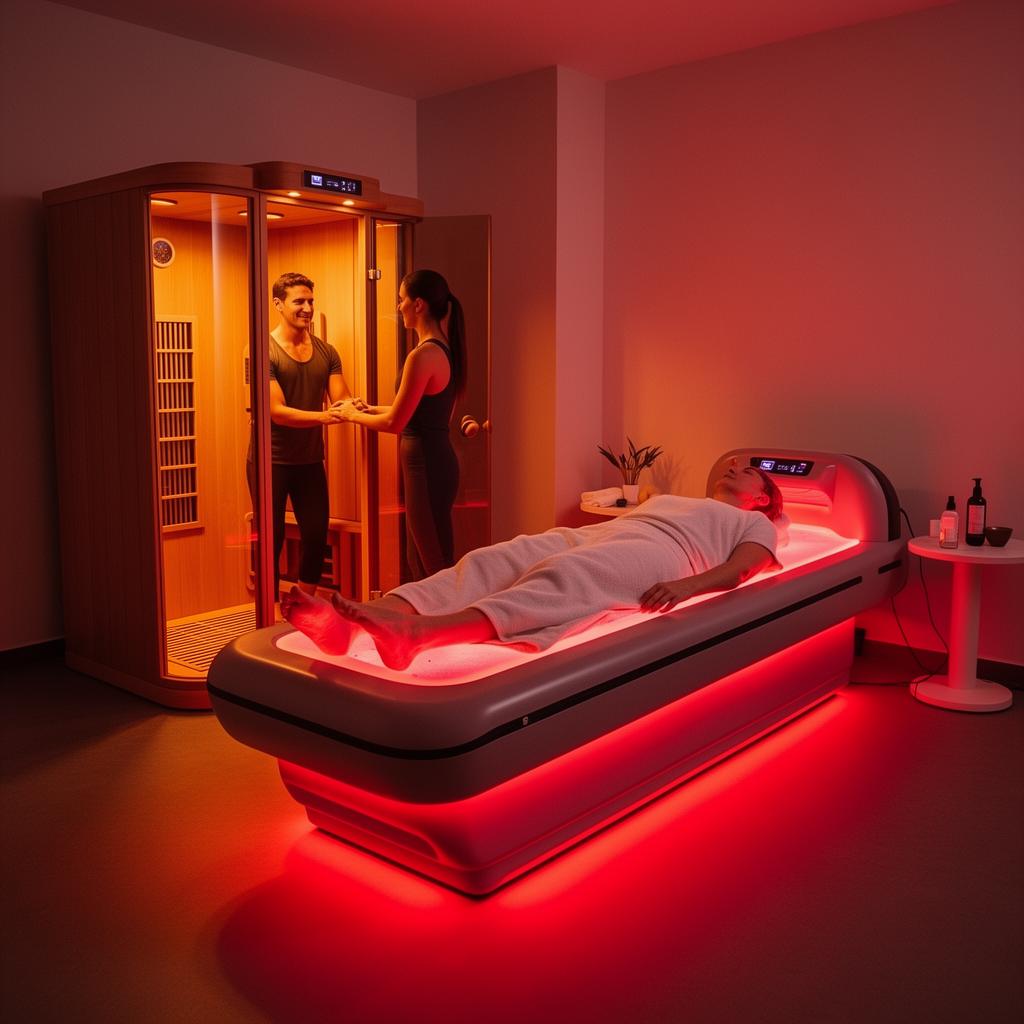
At REDSOL Wellness Club, we offer state-of-the-art red light therapy sessions designed to harness these powerful benefits. Our full-body red light therapy pro bed encompasses the entire body, ensuring comprehensive exposure for systemic benefits, including hair regrowth. For targeted scalp treatment, our red light facial devices can be a great complement or a focused approach for those primarily concerned with scalp health.
A typical session is relaxing and comfortable. Consistency is key for optimal results, as hair growth is a gradual process. We recommend a regular schedule of sessions, tailored to your individual needs and goals, similar to the protocols used in the clinical studies cited.
In addition to red light therapy, REDSOL Wellness Club offers a holistic suite of wellness services that can complement hair regrowth efforts. For instance, our infrared sauna therapy promotes detoxification and improves circulation, indirectly supporting overall health crucial for hair vitality. Furthermore, NAD+ therapy and peptide therapy can address cellular health and hormonal balance, which are foundational for healthy hair growth.
Ready to explore the benefits of red light therapy for your hair health and overall well-being? Book an intro visit today and let our experts guide you on your wellness journey.
Frequently Asked Questions About Red Light Therapy & Hair Regrowth
Q: Is Red Light Therapy clinically proven for hair loss?
A: Yes, several low-level laser therapy (LLLT) devices, which use red light, have been clinically validated for the treatment of androgenetic alopecia in both men and women (Leavitt et al., 2009, Journal of Clinical and Aesthetic Dermatology).
Q: How long does it take to see results from Red Light Therapy for hair growth?
A: While individual results vary, clinical studies typically show noticeable improvements in hair density and thickness within 16 to 24 weeks of consistent treatment. Continued use is often recommended to maintain results (Kim et al., 2013, International Journal of Dermatology).
Q: Are there any side effects of Red Light Therapy for hair?
A: Red light therapy is considered very safe with minimal to no side effects. Some individuals might experience temporary scalp warmth or mild tingling, but these are generally rare and minor (Avci et al., 2014, Seminars in Cutaneous Medicine and Surgery).
Q: Can Red Light Therapy be combined with other hair loss treatments?
A: Absolutely. Red light therapy can be safely and effectively used as a standalone treatment or in conjunction with other hair loss therapies like minoxidil or finasteride. Combination therapies often yield enhanced results (Ghareeb et al., 2018, Journal of Cosmetic Dermatology).
Q: Does Red Light Therapy work for all types of hair loss?
A: The strongest clinical evidence for red light therapy is for androgenetic alopecia (male and female pattern baldness). While it may offer benefits for other types of hair loss by improving overall scalp health, its efficacy is most well-established for AGA (Adil and Godwin, 2017, Journal of American Academy of Dermatology).
Ready to Try Red Light Therapy?
Try your first Red Light Pro-Bed session for just $29 and see the difference medical-grade therapy makes.