Collagen is the foundation of youthful, firm skin — and after age 25, your body produces less of it every year. By age 50, you've lost nearly a quarter of your skin's structural support. Supplements, creams, and serums can only do so much from the outside.
Red light therapy takes a fundamentally different approach: it stimulates your body's own collagen production at the cellular level. At REDSOL Wellness Club in League City, TX, we use medical-grade LED facial therapy to activate fibroblasts and rebuild collagen naturally. Your intro session is $29.
Why Collagen Matters for Your Skin
Collagen makes up approximately 75–80% of your skin's dry weight. It provides the structural scaffolding that keeps skin firm, plump, and resilient. There are several types, but Type I and Type III collagen are the most abundant in skin:
- Type I collagen: The primary structural protein. Provides tensile strength and firmness
- Type III collagen: Supports skin elasticity and is abundant in youthful skin. Gradually replaced by Type I as we age
- Elastin: Works alongside collagen to provide snap-back elasticity
The Collagen Decline
Starting around age 25, collagen production drops by approximately 1–1.5% per year. This decline accelerates after menopause (up to 30% loss in the first 5 years). External factors compound the problem:
- UV exposure: Breaks down existing collagen and impairs new production
- Oxidative stress: Free radicals from pollution, smoking, and poor diet damage collagen fibers
- Chronic inflammation: Produces enzymes (MMPs) that actively degrade collagen
- Poor sleep: Growth hormone release during deep sleep is essential for collagen repair
The visible result? Fine lines, wrinkles, sagging, thinning skin, and loss of that youthful bounce. Read more about how this manifests in our guide on Red Light Therapy for Wrinkles.
How Red Light Therapy Stimulates Collagen
The Photobiomodulation Pathway
Red light therapy works by delivering specific wavelengths of light energy to your skin cells — specifically to the fibroblasts in your dermis that produce collagen. Here's the cellular cascade:
- Light absorption: Red light photons (630–660nm) penetrate through the epidermis into the dermis, where they're absorbed by cytochrome c oxidase in fibroblast mitochondria
- ATP surge: This absorption accelerates the electron transport chain, increasing adenosine triphosphate (ATP) production — the energy currency of cells
- Fibroblast activation: Energized fibroblasts upregulate genes involved in collagen synthesis, specifically increasing production of procollagen Type I and Type III
- Collagen assembly: Procollagen molecules are processed, secreted, and assembled into organized collagen fibers in the extracellular matrix
- Dermal densification: Over weeks of consistent treatment, the dermis becomes measurably denser and more structured
- Surface improvement: Firmer dermal support translates to smoother, plumper skin surface with reduced wrinkle depth
Which Wavelengths Work Best for Collagen?
- 630nm (Red): Optimal for fibroblast activation in the upper dermis. Best for fine lines and surface-level skin improvements
- 660nm (Deep Red): Penetrates slightly deeper. Excellent for collagen stimulation and anti-inflammatory effects
- 810–850nm (Near-Infrared): Reaches the deepest dermal layers. Stimulates collagen remodeling in deeper tissues and supports structural repair
The most effective collagen-building protocols use multiple wavelengths simultaneously, which is exactly what our medical-grade LED devices deliver at REDSOL Wellness Club.
What the Clinical Research Shows
Collagen stimulation through red light therapy is one of the most well-documented benefits in photobiomodulation research:
- The landmark Wunsch and Matuschka study (2014) in Photomedicine and Laser Surgery treated 136 participants over 30 sessions. Using ultrasound imaging, researchers measured a significant increase in intradermal collagen density, along with improvements in skin complexion and roughness
- Research in the Journal of Investigative Dermatology demonstrated that 630nm red light directly stimulates fibroblast proliferation and increases procollagen synthesis in human skin cells
- A study in Lasers in Surgery and Medicine confirmed that red and near-infrared light upregulate collagen Type I and Type III gene expression
- Clinical trials in Dermatologic Surgery measured 20–36% wrinkle depth reduction — a direct result of increased collagen density beneath the skin surface
Red Light Therapy vs. Other Collagen-Building Methods
Collagen Supplements (Oral)
Collagen peptide supplements provide amino acid building blocks, but they don't direct collagen production to specific areas. Red light therapy targets fibroblasts exactly where you need new collagen — in your facial skin. The two approaches complement each other: supplements provide raw materials, red light therapy activates the production machinery.
Topical Collagen Products
Collagen molecules in creams and serums are too large to penetrate the epidermis and reach the dermis where collagen is actually produced. They can hydrate the skin surface temporarily, but they don't stimulate new collagen production. Red light therapy works from the inside out — activating your own cells to produce real, structural collagen.
Retinoids (Vitamin A)
Retinoids are one of the few topical ingredients clinically proven to stimulate collagen. However, they cause dryness, irritation, and sun sensitivity — especially problematic for sensitive or rosacea-prone skin. Red light therapy stimulates collagen without any irritation and can actually be used alongside retinoids (on alternate days) for enhanced results.
Microneedling
Microneedling stimulates collagen through controlled micro-injuries — effective but involves redness, swelling, and 2–5 days of downtime. Red light therapy is often used after microneedling to accelerate healing and amplify the collagen response. Zero downtime on its own.
Maximizing Collagen Results
Recommended Treatment Frequency
- Building phase (weeks 1–12): 2–3 sessions per week for maximum fibroblast activation
- Maintenance (ongoing): 1–2 sessions per week to sustain collagen production above baseline
Collagen-Supporting Lifestyle Factors
- Vitamin C: Essential cofactor for collagen synthesis. Apply topical vitamin C after sessions; supplement orally (500–1000mg/day)
- Protein intake: Adequate protein provides the amino acids (glycine, proline, hydroxyproline) needed for collagen assembly
- Sleep: Growth hormone released during deep sleep is critical for collagen repair. Aim for 7–9 hours
- Sun protection: UV exposure is the #1 destroyer of existing collagen. SPF 30+ daily is non-negotiable
- Hydration: Collagen fibers require proper hydration to maintain their structure and function
Results Timeline
- After 1–2 sessions: Immediate "red light glow" from increased circulation (not yet collagen-related)
- After 2–4 weeks: Skin begins to feel firmer. Early collagen synthesis is underway
- After 8–12 weeks: Measurable increase in collagen density. Visible reduction in fine lines and improved skin firmness
- After 6 months: Peak cumulative results. Skin is noticeably denser, firmer, and more resilient
For detailed frequency recommendations, read How Often Should You Do Red Light Facials?
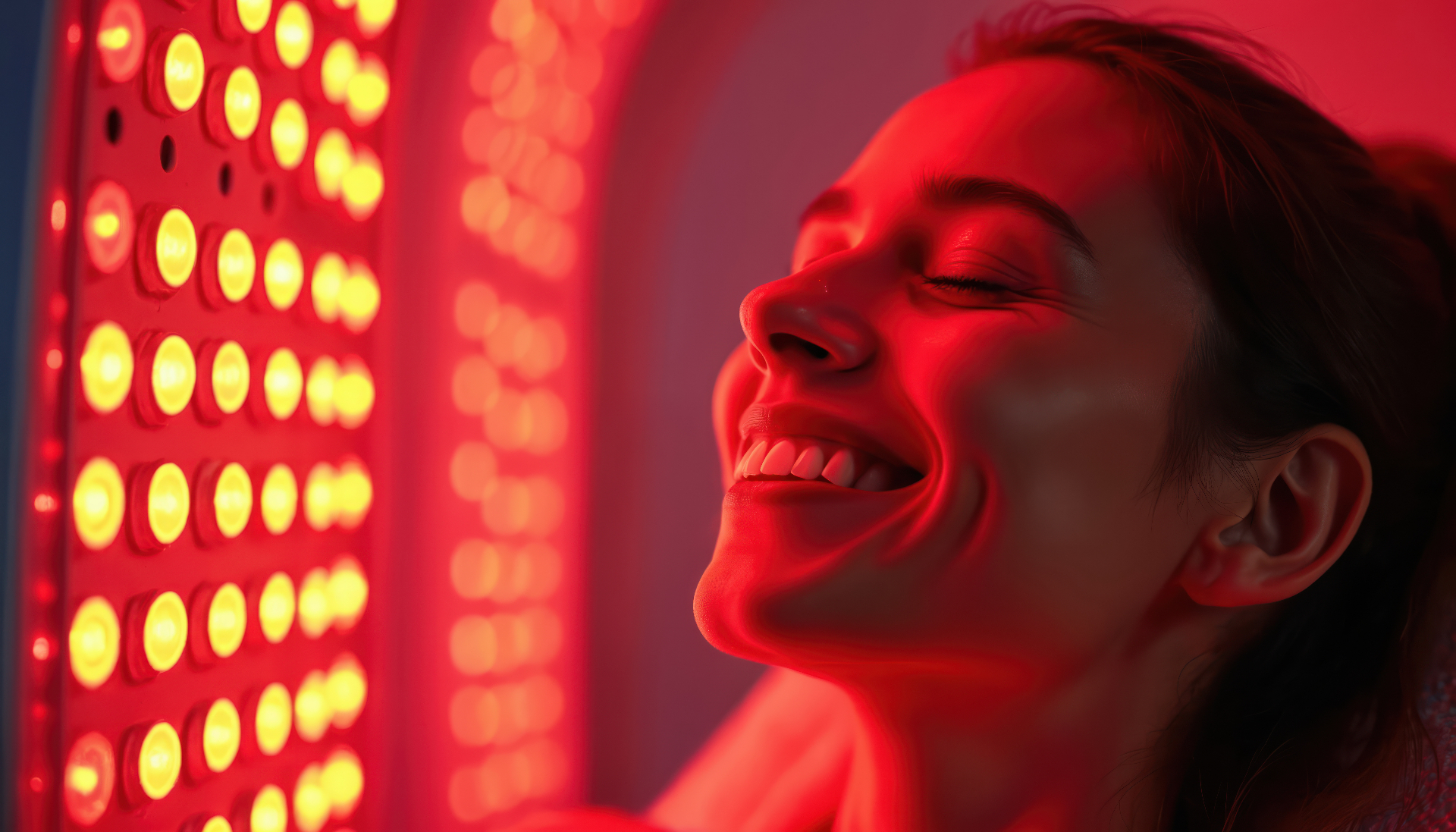
Boost Your Collagen Naturally at REDSOL in League City, TX
REDSOL Wellness Club offers medical-grade collagen-boosting red light facial therapy in League City, TX. Our clinical-grade LED devices deliver precisely calibrated wavelengths at therapeutic power densities to maximize fibroblast activation and collagen production.
We serve clients from League City, Clear Lake, Webster, Friendswood, Kemah, Nassau Bay, Seabrook, Pearland, and the greater Houston area.
Your intro session is $29
Start rebuilding your skin's collagen naturally. Book your $29 red light facial intro at REDSOL Wellness Club today.
- 📍 3311 FM Rd 518 East, Suite 200, League City, TX 77573
- 📞 (281) 979-5152
- 🕐 Mon–Sat 8AM–7PM · Sun 8AM–6PM
Try Your First Session $29
New to REDSOL? Intro sessions start at $29 in League City, TX.
BOOK YOUR INTROReady for a Red Light Facial?
Try your first Red Light Facial session for just $29 and see the difference medical-grade therapy makes.