Quick Answer
Targeted red light therapy focuses red and near-infrared light on one specific area, like a knee, lower back, or shoulder. Research on photobiomodulation suggests this light can support cellular energy production, help calm inflammation, and improve circulation in the treated tissue, which may reduce discomfort for some people. At REDSOL, Red Light Flex delivers targeted red light to the exact area that's bothering you, and it can be combined with full-body red light or the infrared sauna.
Some pain is everywhere. Most pain isn't.
For a lot of our members, it's one knee that complains on the stairs, a lower back that stiffens after a long day at a desk, or a shoulder that hasn't been right since an old injury. That's where targeted red light therapy comes in.
What Is Targeted Red Light Therapy?
Targeted red light therapy concentrates red and near-infrared light on a specific body part instead of the whole body. It uses the same science as full-body red light beds - photobiomodulation - but focuses the light where you need it most.
At REDSOL, our targeted option is Red Light Flex. It's a flexible LED light therapy panel that's positioned directly over the treatment area, so light reaches the joint or muscle from close range.
How Red Light Therapy May Help With Pain
Red and near-infrared light are absorbed by the mitochondria in your cells, the part responsible for producing energy. Research on photobiomodulation suggests this can lead to several effects relevant to pain:
- Support for cellular energy (ATP) production, which tissues use to repair and function
- Modulation of inflammation, which plays a role in many types of joint and muscle discomfort
- Improved local circulation, bringing more oxygen and nutrients to the area
Near-infrared wavelengths penetrate deeper than visible red light, which is why they're often studied for joints and muscles. For a deeper look at the mechanism, read What Does Red Light Therapy Do?
Red Light Therapy for Knee Pain
Knee discomfort is one of the most studied areas in red light research, especially for osteoarthritis. Several clinical studies and reviews suggest photobiomodulation may reduce pain and improve function for some people with knee osteoarthritis, though results vary between studies and protocols.
Who tends to ask about it: runners, people who are on their feet all day, and adults noticing stiffness that wasn't there 10 years ago.
Red Light Therapy for Lower Back Pain
Lower back pain is often driven by muscle tension, stiffness, and inflammation. Some research suggests red and near-infrared light may help reduce non-specific lower back discomfort, particularly when combined with movement and other supportive care.
A good pairing: Many members use Red Light Flex on the lower back, then spend time in the infrared sauna, where gentle heat helps tight muscles relax.
Red Light Therapy for Shoulder Pain
Shoulder discomfort from overuse, old injuries, or tension in the neck and upper back is common. Research on photobiomodulation for shoulder conditions is smaller than for knees, but the same mechanisms - cellular energy, inflammation, and circulation - apply.
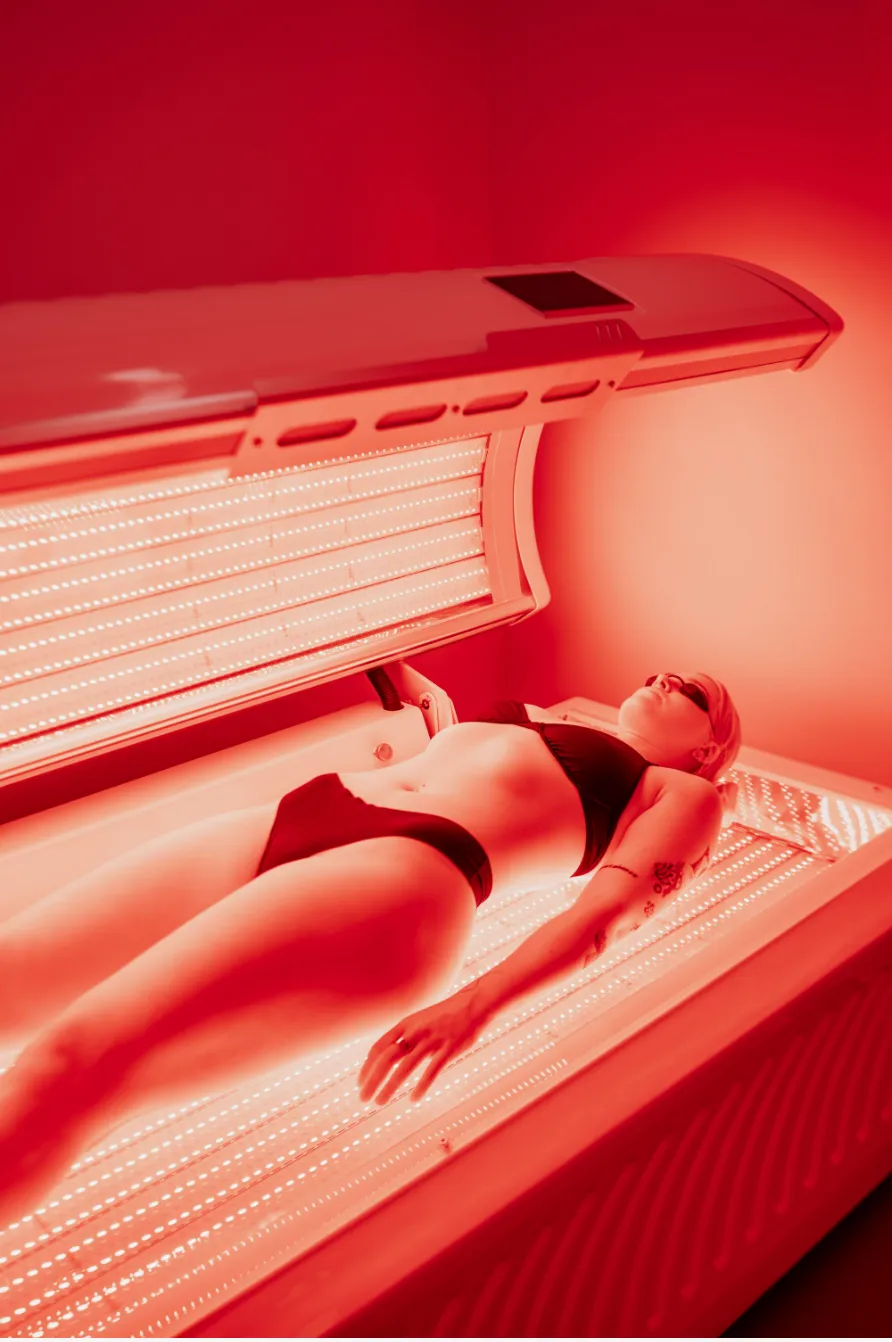
Targeted vs. Full-Body Red Light: Which Should You Use?
| Red Light Flex (targeted) | Red Light Pro-Bed (full body) | |
|---|---|---|
| Best for | One specific problem area | Whole-body recovery, skin, energy, sleep |
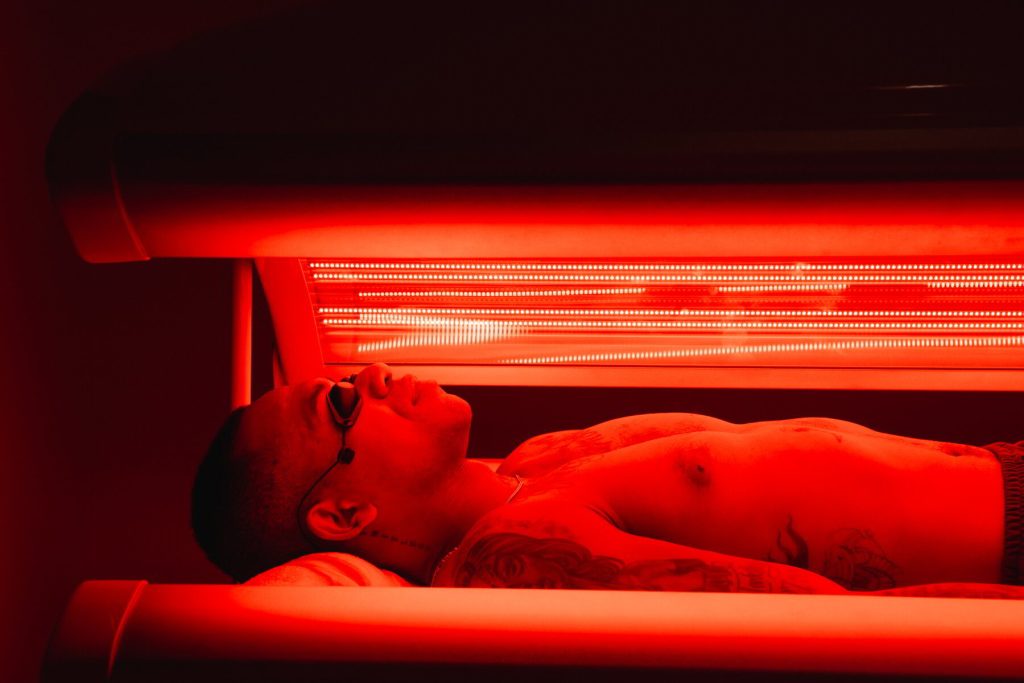
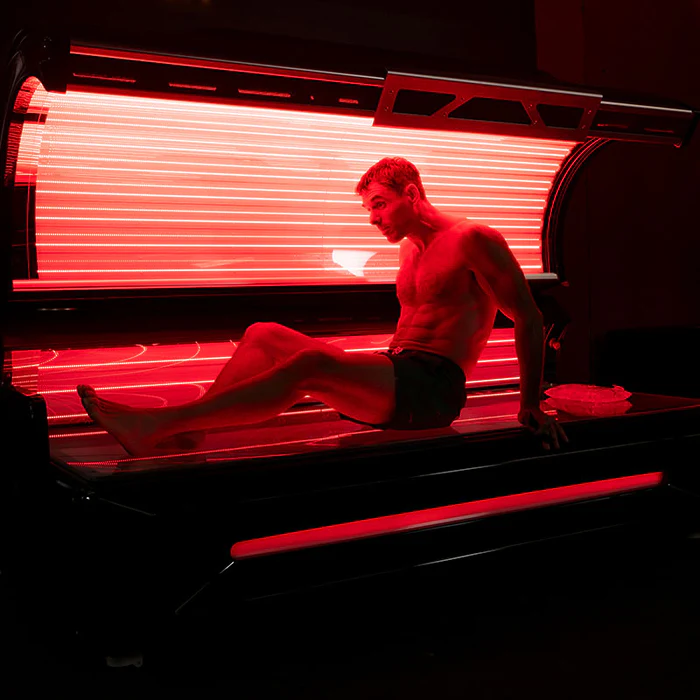
| Coverage | Focused on a joint or muscle | Head to toe |
| Session | 15-20 minutes | 12 minutes |
Many members do both. The Pro-Bed supports whole-body recovery and well-being, while Flex gives extra attention to the area that needs it most.
How Often Should You Use Red Light Therapy for Pain?
Consistency matters more than intensity. Research protocols commonly involve sessions several times per week over a number of weeks. Our team will recommend a schedule based on your goal. For general guidance, see How Often Should You Do Red Light Therapy?
What Red Light Therapy Can't Do
Being honest here matters:
- Red light therapy is not a replacement for medical care. If you have a new injury, severe pain, swelling, numbness, or pain that's getting worse, see a doctor first.
- It doesn't fix structural problems like torn ligaments or severe joint damage.
- Results vary from person to person.
It's best thought of as a supportive, drug-free tool alongside movement, strength work, and your doctor's advice.
Is Red Light Therapy Safe for Joint Pain?
For most people, red light therapy is very well tolerated. It uses no UV light and doesn't burn the skin. If you're pregnant, take light-sensitizing medications, or have a history of skin cancer, check with your doctor first. Read more in Is Red Light Therapy Safe?
Try Targeted Red Light in League City
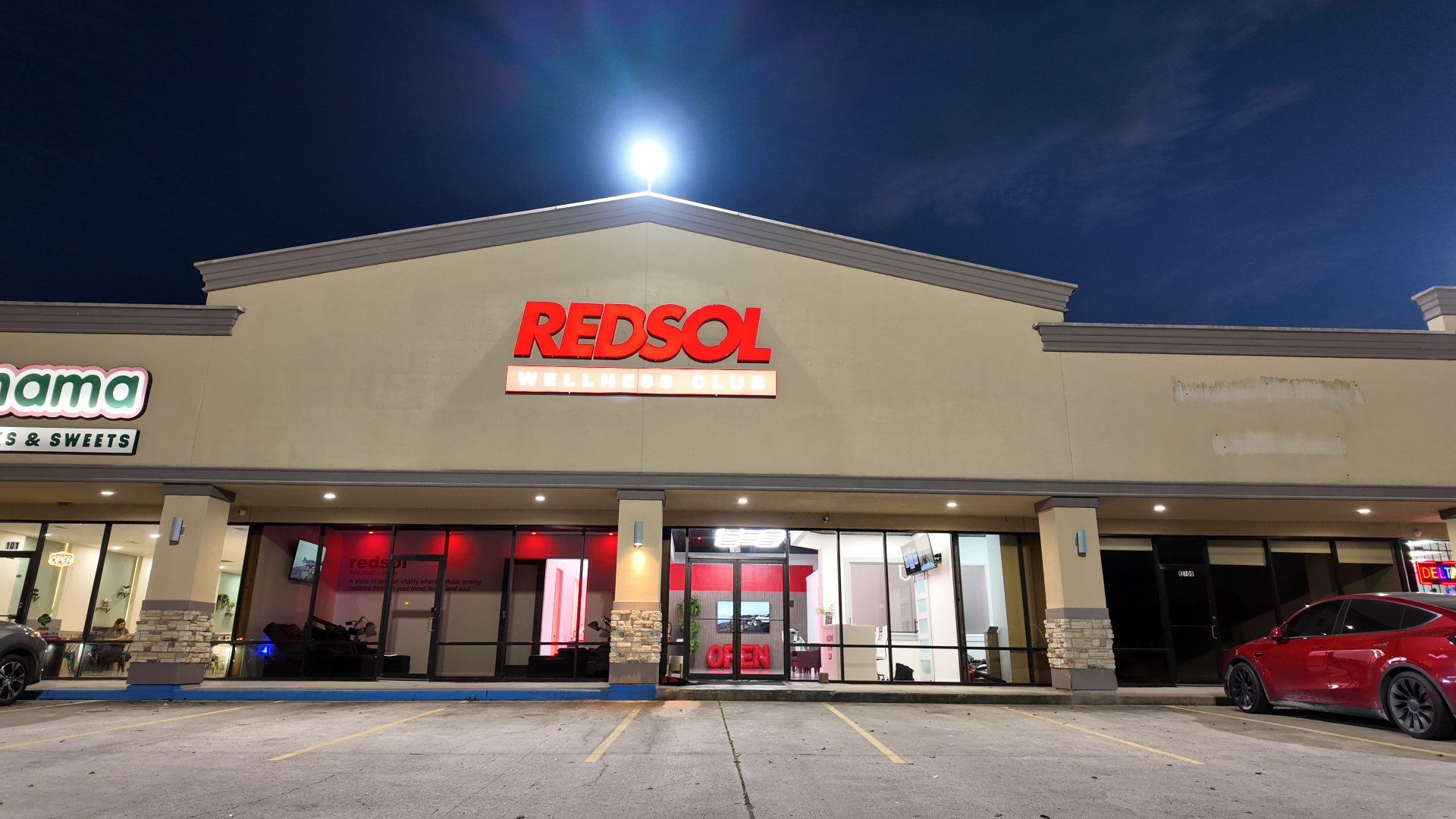
REDSOL Wellness Club is at 3311 FM Rd 518 East, Suite 200, League City, TX - 5 minutes from Clear Lake and Webster. We're open until 7 PM on weekdays, so it's easy to stop in after work.
Book your $29 intro and tell us where it hurts. We'll recommend the right combination of Red Light Flex, the Pro-Bed, and the sauna.
This article is for educational purposes only and is not medical advice. Red light therapy is not intended to diagnose, treat, cure, or prevent any disease. Consult a qualified healthcare provider about any pain or injury.
FAQ
About the Author
Chase Hanson
Chase Hanson is the co-founder of REDSOL Wellness Club in League City, TX. He spent over a decade leading marketing and operations for some of the fastest-growing med spa and wellness brands in the country before opening REDSOL.
Ready to Try Red Light Therapy?
Try your first Red Light Pro-Bed session for just $29 and see the difference medical-grade therapy makes.